Lines · copper and drain
HVAC Re-Piping
Copper refrigerant line replacement and condensate drain line repairs, for lines lost to corrosion, leaks or a refrigerant that is being phased out.
When the lines are the problem, not the unit
An air conditioner moves heat through two pieces of copper. The larger one is the suction line, usually wrapped in black insulation, and the smaller one is the liquid line. Together they are the refrigerant line set, and they run from the outdoor condenser through a wall or the slab to the coil at the air handler. When one of them leaks, the system slowly loses charge. It cools less each week, the coil ices over, and a technician who only adds refrigerant is topping off a bucket with a hole in it.
Copper lines fail for reasons that are well known in the trade. Formicary corrosion is the common one: acids from household products and building materials form tiny tunnels in the tube wall, and the leak that results is so fine that it can take a nitrogen test to find it. Lines also get crushed or kinked when someone moves a condenser, rub through where they pass a framing member, lose their insulation to sun and animals, or carry a failed braze from an earlier repair.
The condensate drain is the other half of this work. It carries the water the coil pulls out of the air to a safe place outside. PVC cracks, joints let go, slopes settle, and an old drain can clog repeatedly because its run is wrong, not because it was dirty. Water stains on a ceiling under the attic air handler usually point here.
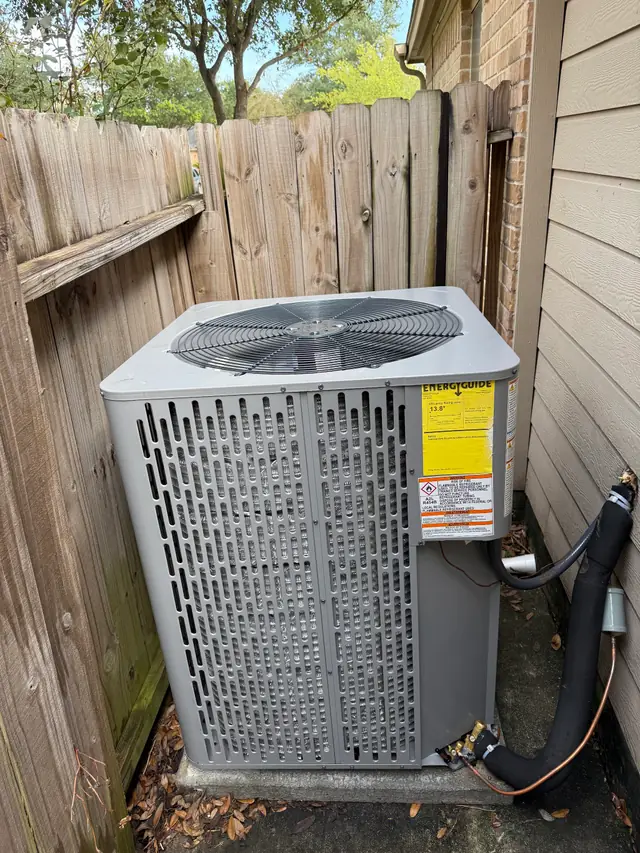
Insulated copper line set entering the wall beside a condenser
How a replacement line set goes in
Douglas Mechanical lists HVAC re-piping as a service: copper refrigerant line replacement and condensate drain line repairs, driven by corrosion, leaks, and refrigerants being phased out. The last reason is worth understanding. When a system is moved to a different refrigerant, the existing copper is not always suited to it, so the lines are replaced or the system is replaced with them in mind. The technician on your job can tell you which applies to your equipment.
Done properly, the order of work is the same everywhere. Size the line to the equipment, because a tube that is too large or too small starves the compressor of oil return. Run it with proper support and keep it clear of anything that will rub it. Flow nitrogen through the tube while brazing so the inside does not scale. Then pressure test with nitrogen and watch the gauge, pull a deep vacuum and confirm it holds at the micron level the manufacturer asks for, and only then release refrigerant and set the charge to specification.
The shop that does this work is licensed under Texas HVAC License TACLA20014C and uses factory authorized brand name equipment and parts. Estimates are free and in your home, and the person who prices the job is the owner, not a salesman paid on commission.
What a sound line set buys you afterward
New copper with fresh insulation, supported where it passes through framing and sealed where it enters the house, stops the slow loss of charge that was wearing the compressor down. The coil stops icing, the system finishes a cooling cycle instead of running all afternoon, and the pressure readings on the next service visit come back as the manufacturer expects them to.
A repaired condensate drain protects the ceiling, the insulation and the drywall below the air handler. Ask for a float switch if there is not one, since it shuts the system off before a stopped drain turns into a water stain. Rinsing the drain line at each seasonal visit keeps it moving.
That upkeep is the part people forget. A Silver, Gold or Platinum maintenance agreement puts two tuneups a year on the calendar, and each is a chance for a technician to look at the insulation, the line supports and the drain. Technicians are in the field 8am-8pm, seven days, and a leak that appears on a Sunday does not have to wait for Monday.
Texas HVAC License TACLA20014C, Trane Comfort Specialist, working out of Spring since 1975. Owner Jared prices re-piping himself; the office takes calls at (281) 299-0949.