Heating · heat pump and gas
Heating Repair
Heat pump and furnace repair, including emergency calls. Gas leaks, scorched wiring and carbon monoxide are why a heating problem is never left for later.
The no-heat morning, and the smells that matter more
Heating fails on the coldest mornings because that is when it is asked to run for hours instead of minutes. A heat pump that spent the summer cooling the house is suddenly the only thing between the family and a freeze. A gas furnace in the attic has not fired since March. The signs are familiar: registers that push lukewarm air, an outdoor unit wearing a coat of ice, a system that starts and stops every few minutes, a click at the thermostat call with no flame behind it, a house that never reaches the number on the wall.
Some symptoms are about more than comfort. Douglas Mechanical names three stakes in heating work: gas leaks, electrical fires and carbon monoxide. A gas smell near the furnace, a scorched smell from the air handler, or a breaker that trips and gets reset again and again are not problems to leave until the weekend. Shut the system off at the thermostat and call. Carbon monoxide has no smell at all, so working alarms in a house with gas heat are the check that counts, and a cracked heat exchanger is one of the ways it reaches the supply air.
Both kinds of equipment get repaired here. Heat pump repair and furnace repair are separate trades with separate parts, and emergency heating repair is a service of its own, because a heating failure rarely waits for the office to open.
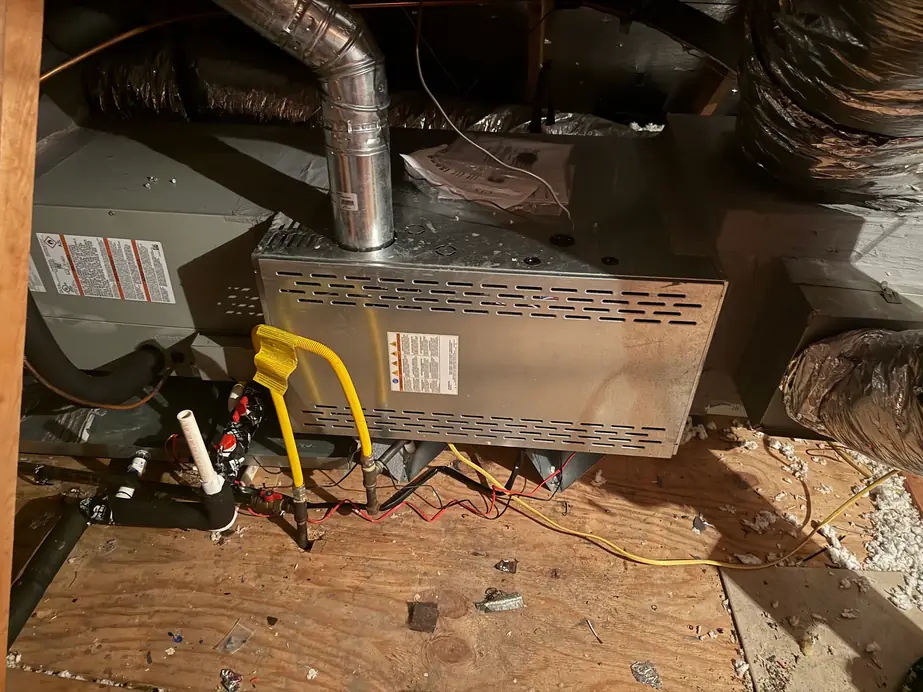
Attic gas furnace with its flex gas connector and condensate line
What a heating diagnosis checks, in order
The thermostat comes first, because a control that reads three degrees off will mislead every test after it. Thermostat and HVAC control repair, installation and calibration are part of the work, including smart thermostats, so a call for heat that never reaches the equipment gets traced back to the wall before anything else is blamed.
On a heat pump, the questions run through the outdoor unit. The contactor pulls the compressor and fan on. The capacitor gives them their starting kick. The reversing valve flips the refrigerant flow so the unit heats instead of cools, and a valve that sticks leaves a heat pump blowing cool air in January. The defrost cycle briefly reverses the unit to melt frost off the outdoor coil, and a defrost control that fails lets the coil turn into a block of ice. Indoors, the electric heat strips in the air handler are the backup that carries the house when the pump cannot keep up, so a system whose strips run all day is telling you the heat pump side is not doing its job. The evaporator and fan coil, the blower motor and the airflow across them get checked too, since repair, installation and maintenance of the evaporator and fan coil is a service line here.
On a gas furnace, the order follows the ignition sequence. The inducer motor starts, the pressure switch proves the draft, the igniter lights the burners, the gas valve opens, and the flame sensor confirms the flame before the blower runs. A furnace that lights and drops out after a few seconds often has a dirty flame sensor. One that clicks and never lights points at the igniter, the pressure switch or a blocked vent. The heat exchanger is looked at as a safety item rather than a comfort item. Replacement parts are factory authorized brand name parts, and the technicians are trained in diagnosing and recommending only the work you actually need. Nobody here is a salesman on commission, and the in-home estimate is free.
After the repair: what to watch, and what prevents the next call
A heating repair is finished when the house holds its temperature through the night, not when the unit first turns on. Watch for the signs the root cause is still there: short cycling, ice that returns on the outdoor coil, rooms that heat unevenly, a flame that burns lazy and yellow instead of crisp and blue, or any new smell from the equipment. Any one of those is worth a call back. Same day service is guaranteed for emergency repairs, and the trucks stay out until 8pm all week, which matters because heat tends to quit in the evening, after the office has closed.
Most winter breakdowns are the end of a slow decline that a seasonal check would have caught: a flame sensor gone dull, a capacitor weakening, a coil clogging, a loose electrical connection running warm. That is the case for the Silver, Gold and Platinum maintenance agreements, each with biannual seasonal tuneups, so the heating side is looked over in the fall before the first cold snap. Members also get priority scheduling, maintenance documentation and discounted pricing on parts and labor.
Some repairs end with a different conversation. When the equipment is old and the fix is large, the free in-home estimate is where repair against replacement gets decided with the numbers on the table, and a new heat pump is covered on the heating installation page. The decision stays yours, and every job is backed by the 100% Satisfaction Guaranteed promise.
Texas HVAC License TACLA20014C. Trane Comfort Specialist. Repairing heating out of Spring since 1975. Office at (281) 299-0949 until 6pm on weekdays; technicians are in the field 8am-8pm, seven days.